

Chapter 7
Liquidation
May discharge qualifying unsecured debts, subject to exceptions. Liens generally survive unless avoided or otherwise resolved; nonexempt property may be sold.
Learn About Chapter 7
Bankruptcy & Debt Discharge
Bankruptcy can eliminate many debts, but some obligations may remain. Learn which debts are treated differently and why.
A discharge removes your personal obligation to repay covered debts and generally prohibits creditors from collecting them from you. It does not erase every debt or automatically remove a valid lien on property. The rules depend on the debt and the chapter you file.
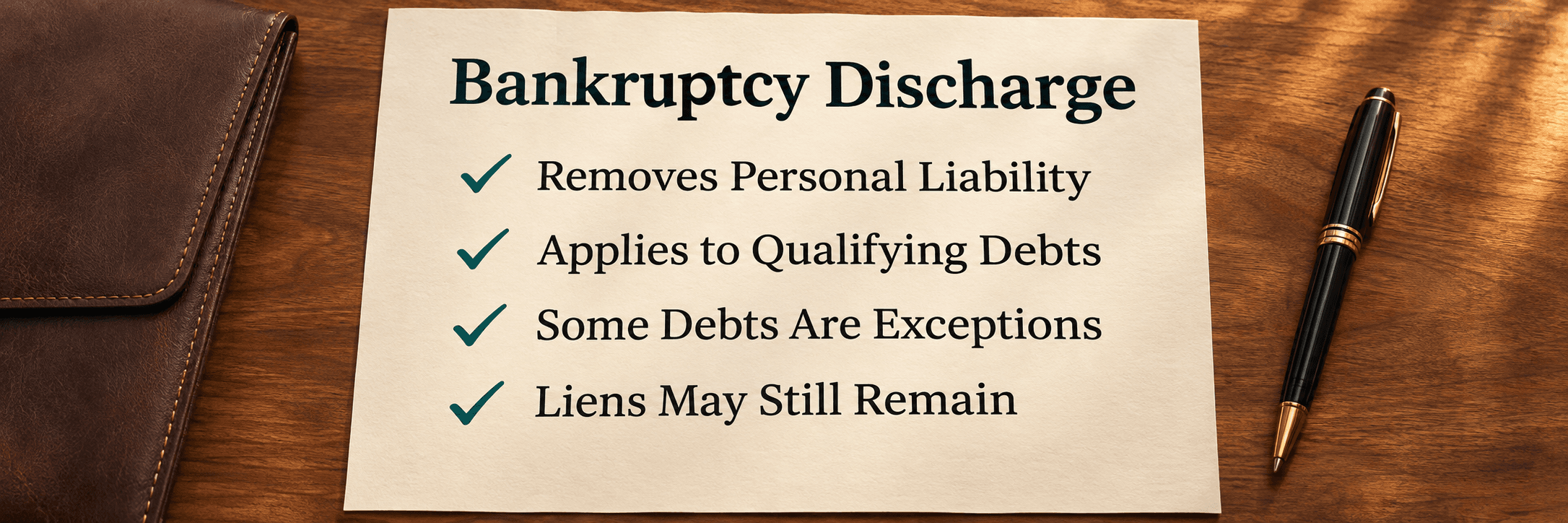
These common categories may remain after bankruptcy. Specific exceptions, court findings, and the type of discharge can change the outcome.
Domestic support obligations, including child support and qualifying alimony, remain. Other divorce-related debts may follow different rules.
Many recent taxes and debts involving unfiled returns, fraud, or evasion remain. Some older income taxes may qualify.
Covered education loans generally remain unless a court finds undue hardship. Some loans fall outside the exception.
Fines and restitution imposed in a criminal sentence generally remain. Other penalties can be treated differently under each chapter.
Fraud-related debts may remain if a creditor timely requests and obtains a court ruling that the discharge exception applies.
Important: This is not a complete list. A completed Chapter 13 plan can discharge some debts that Chapter 7 or a Chapter 13 hardship discharge cannot. Student loans and fraud-related debts may require a separate court proceeding to determine dischargeability.
Many ordinary unsecured debts may qualify for discharge. Exceptions still apply, including certain debts involving fraud or recent borrowing.

Ordinary unsecured credit card debt may qualify for discharge, subject to exceptions such as fraud.
Learn About Credit Card Debt
Many unsecured medical bills from before filing may qualify. New bills generally are not covered.
Learn About Medical Debt
Unsecured personal loans may qualify for discharge. Collateral and other exceptions can change how a loan is treated.
Explore Bankruptcy OptionsBoth chapters can discharge eligible debts, but the process and exceptions differ. An attorney can review which obligations may remain in your situation.
Liquidation
May discharge qualifying unsecured debts, subject to exceptions. Liens generally survive unless avoided or otherwise resolved; nonexempt property may be sold.
Learn About Chapter 7
Repayment Plan
Eligible remaining debts may be discharged after a repayment plan, usually lasting three to five years. A completed-plan discharge has different exceptions; a hardship discharge is narrower.
Learn About Chapter 13
The account’s label alone does not determine whether it can be discharged. A review of the debt and its history helps clarify your options.
Different debt categories follow different rules for bankruptcy discharge.
Borrowing dates, tax periods, and filing dates can affect discharge.
The chapter, supporting facts, and any required court decision matter.
A lien may survive even if personal liability is discharged.
Yes. For loans covered by the education-debt exception, a court can grant discharge if repayment would impose undue hardship on you and your dependents. This generally requires a separate lawsuit within the bankruptcy case, called an adversary proceeding. The Justice Department provides a process for evaluating federal student-loan discharge requests. Some education loans are outside the statutory exception; an attorney can review your loan documents and the requirements that apply.
Some income tax debts may qualify, but age alone is not enough. The type of tax, return deadlines, when returns were filed, assessment dates, fraud or evasion, and bankruptcy chapter all matter. Many tax debts remain or must be paid through a plan. A valid tax lien may also survive a discharge of personal liability. Have an attorney review your returns, transcripts, and lien notices before relying on discharge.
Yes. Bankruptcy does not discharge domestic support obligations such as child support and qualifying alimony. Chapter 13 may provide a way to address arrears through a plan, but ongoing support must still be paid. A Chapter 13 discharge generally requires certification that required support payments are current. Other divorce-related debts, such as property settlements, can have different rules and should be reviewed separately.
A discharge can remove personal liability without removing a creditor’s valid lien on a home, vehicle, or other property. Unless the lien is avoided or otherwise addressed through the bankruptcy process, the creditor may still enforce it against the property. Keeping collateral can require payments or other action under the applicable chapter. An attorney can explain the debt, lien, and property consequences separately before you choose a course of action.
Bring account statements, tax records, support orders, and any court or loan documents to an attorney. Do not assume an obligation has ended because you filed. Submitting a request to StartOverNow.us does not file a bankruptcy case, discharge a debt, or start the automatic stay.

Request a connection with a participating bankruptcy law firm to discuss your options and find a clear next step.
Our team will review your request. A law firm connection is not guaranteed.